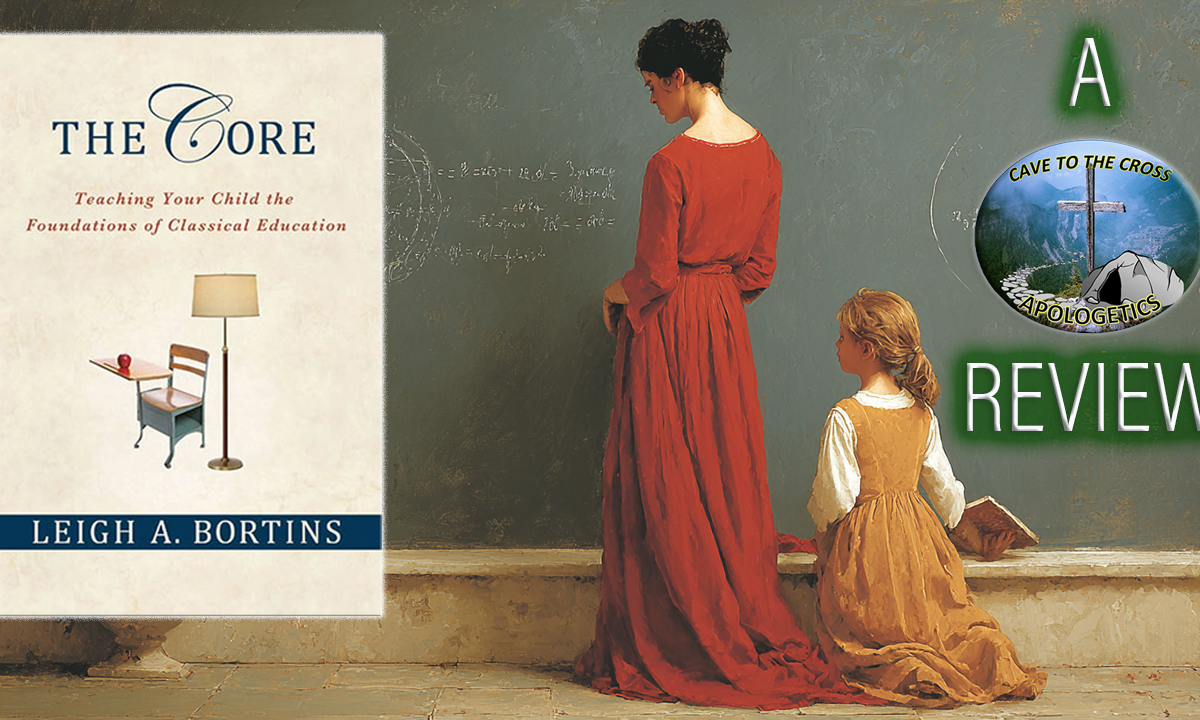
The Core by Leigh A. Bortins
Synopsis:
The founder of Classical Conversations critiques modern schooling for neglecting essential knowledge and pushes homeschooling parents toward the grammar stage of the classical trivium, emphasizing memorization and core subjects to build a strong foundation. Bortins offers clear, actionable strategies for teaching reading, writing, math, geography, history, science, and fine arts at home, stressing rote learning of facts, timelines, great books in their original forms, and rigorous skill-building over superficial or politicized topics.
Video
Review
When the wife checks out the book from the library to read and says that you will read it too, you pick it up and finish it in a night. That’s just what homeschool dads do.
As part of the Classical Conversations (CC) community, we thought it was important to read the founder’s thinking on what led her to embrace classical education. Nothing in this book is going to go into the CC model specifically, but elements of what CC does is expressed here. This isn’t a book that sells CC to the reader, but to put forth why classical education should be embraced and what it looks like in the “from home” homeschool setting.
That is how the book is split up – the problem and the solution. Mixed in is Bortins’ personal journey and what would lead her to develop CC. She identifies the problem of modern schooling, especially government schooling, and puts forth the case that the Prussian model isn’t working. The fact that this was published in 201,0 and seeing the stats in the book paints a sad picture of what 15 more years and government lockdowns for two years have done to a majority of American schoolchildren. Bortins talks about the solution being the classical Western model and always at the foundation is the Christian worldview and the Bible as the foundational support. What the book doesn’t do, and this is what I see in many classical education primer books, is make the case for WHY EXACTLY the classical model is the way to go. Mostly it’s the embrace of it being classical (as in old and what was done before Horace Mann came onto the scene). However, I do have to realize that the audience is probably going to be moms and/or homeschool moms and so the theory is less important and the practical will be emphasized.
That is definitely what one gets in the second half of the book, and it covers the seven main subjects and the use of the trivium as understood by Dorothy Sayers. While the coverage isn’t step by step, there is enough to build upon, and some good books cited that would help anyone get started or to check out the model further. The two sections, and especially this section, aren’t divorced from each other, but there’s still a touchpoint to discuss why the “from home” homeschooling is the way to think about it and what the classical model affords a child, a parent-teacher, and the holistic household.
Overall, this is a good primer, and it’s nice that it’s not just a sales book to pump Classical Conversations. That can all be done after reading the book or checking out other classical models and having the in-house conversations (hopefully not fighting) there.
Final Grade
B
Get The Book (And Support The Show)
Cave To The Cross GoodReads Page
 To check out more reviews and see what Patrick’s reading go to his GoodReads page here.
Other book reviews can be found here.