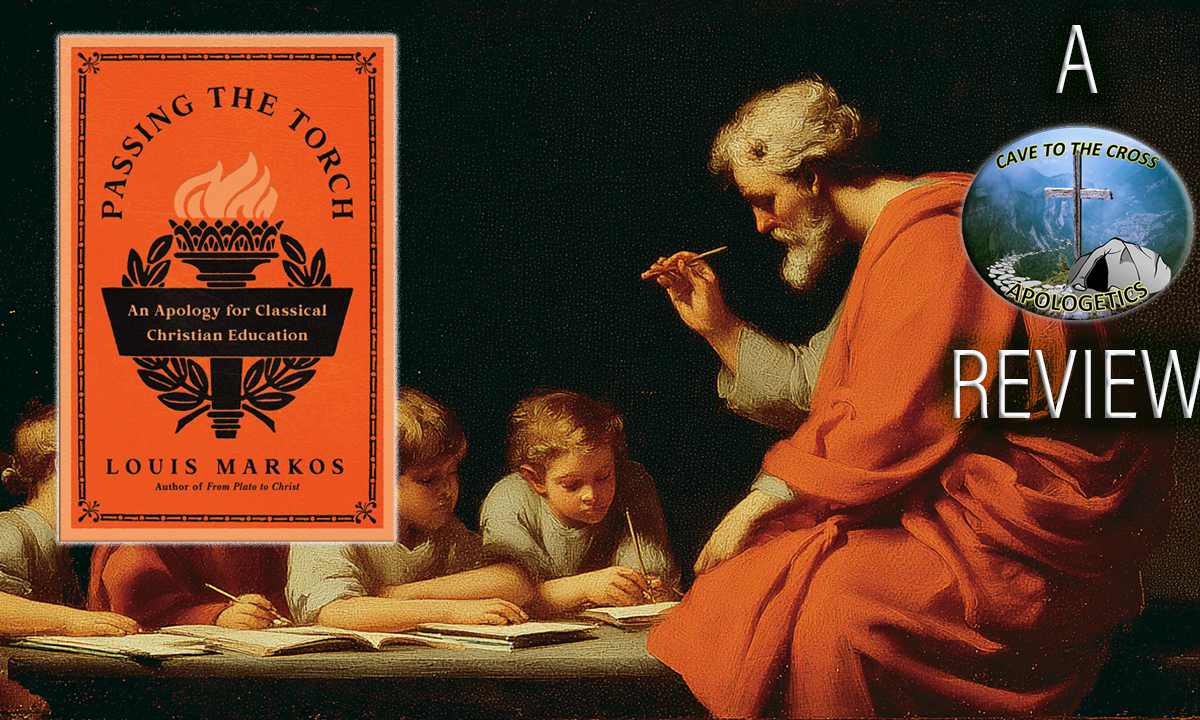
Passing the Torch – An Apology for Classical Christian Education by Louis Markos
Book Review – Passing the Torch – An Apology for Classical Christian Education by Louis Markos
Synopsis:
In Louis Markos’s strong defense Passing the Torch: An Apology for Classical Christian Education, the scholar and professor argues that modern education has lost its way and calls for a return to classical Christian approaches that focus on building character and virtue rather than just practical skills. Drawing from key thinkers like Plato, Augustine, C.S. Lewis, and Dorothy Sayers, Markos contrasts the lasting value of traditional learning with newer models that often overlook objective truth and shared responsibility. Through clear essays and thoughtful analysis, he helps parents, teachers, and homeschoolers understand and promote an education rooted in the Christian heritage of the West. Blending solid scholarship, fair critique, and genuine enthusiasm, this book encourages readers to embrace classical learning’s power to shape wise and virtuous people while affirming the Creator’s purpose for education in a broken world.
Video
Review
Starting in 1934, Werner Jaeger began his work on the three-volume series on the establishment of Greek culture and through the education developing the citizenship and character of the Greek person – his or her Paideia. Martin Cothran, of Memoria Press, described it as one of the best works of classical education you could find (paraphrased). I’ve just started reading it and I came upon Markos’ book that presents a more direct linking of Paideia and classical education. On the subject of what is classical education, its importance, and the tracing of the history of not just classical education but also modern-western, secular education history and debate; Markos does a phenomenal just in 240 pages.
In the first part of the book, Markos defines the terms and gives the basis for the classical education model. Again, borrowing from Jaeger’s Paideia he contrasts the classical with the modern, secular style. While making the distinctions clear, Markos focuses on the benefits of items like liberal arts vs vocational, a Western canon vs ideological texts, books vs textbooks, history vs. social studies, and humanities vs. social sciences. What doesn’t get lost is the focus on the classical model and this shows the quality of writer Markos is. Whereas one could mention all sorts of major shortfalls of the modern western system and decry the communistic progressive takeover and agenda pushing, Markos focuses more on what the classical model offers and uses the contrasting model in contention as a short touchpoint. Markos isn’t writing for the Twitter crowd but using the rhetoric to communicate the beauty of the classical method while also showing the benefits in all areas of life. If all you gave someone was this first half of the book to have a really good explanation and starting point for classical education this book would be worth it.
Then you get the second half of the book, which traces the history of Western education from Plato to Augustine and then makes a sharp leftist hand turn as Rousseau and Dewey. I do have to say that I was slightly in awe of Markos not only not calling both these men villains of the highest order of the second millennia but actually had areas of praise to deliver out where appropriate. Finally the discussion of people like C.S. Lewis, Dorthy Sayers, Charolotte Mason, Mortimer Adler, and Doug Wilson (among others) in pushing forward the modern-day resurgence of Western classical education. Again, I was impressed at the balanced attitude towards Sayers and Mason and I think both sides of that internal conversation will walk away happy (or at least equally both unhappy).
I really appreciated this book and Markos’ work. I almost feel bad now having to reader Jaeger’s book on the subject but this probably will provide a great foundation for getting more into the weeds of Paideia. A small critique I would have is that the two parts of the book do seem very much like two parts. I would have enjoyed a few more tie-ins directly pointing back to direct parts of the previous section of the book. This is not to say they are discarded or you’re lost in the ideas of where they happen, but I do think the knitting together could have happened just a bit closer. This will be a resource for those wanting to know more about classical education, firming up the foundational thoughts of classical education, or a tool to give to a homeschool parent looking at what direction to take
Final Grade
A
Get The Book (And Support The Show)
Cave To The Cross GoodReads Page
 To check out more reviews and see what Patrick’s reading go to his GoodReads page here.
Other book reviews can be found here.