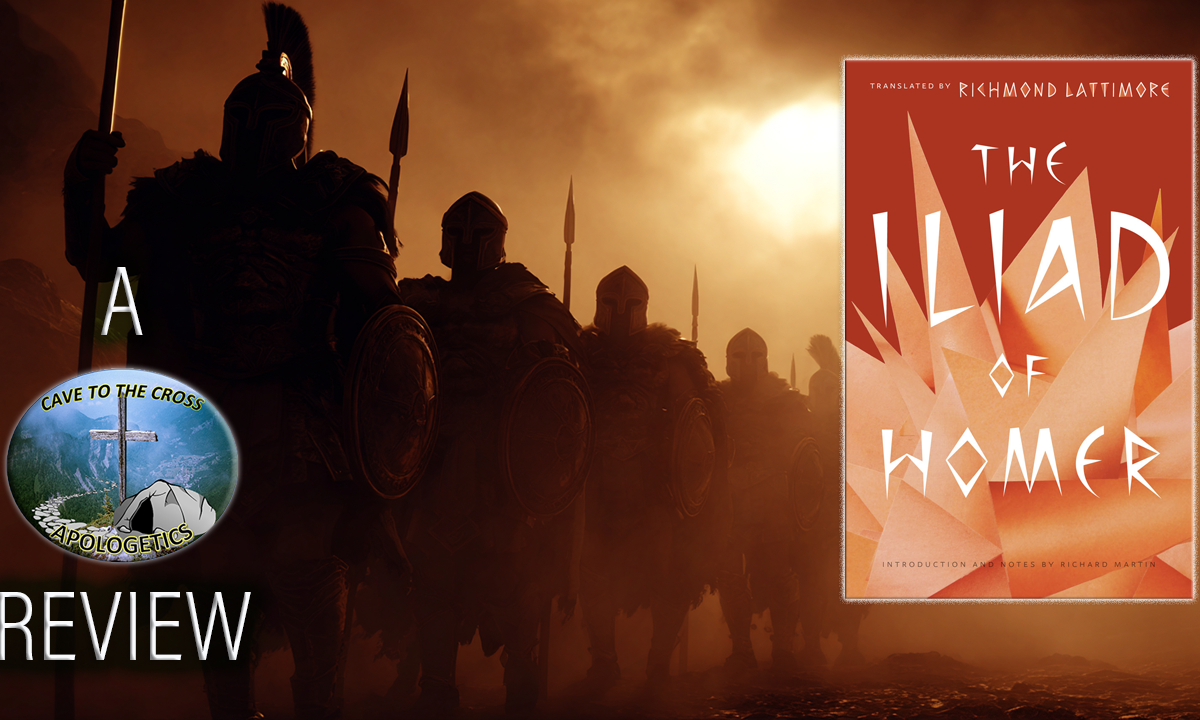
The Iliad
Synopsis:
In Homer’s ancient epic The Iliad, the poet invokes the Muse to sing of the wrath of Achilles during the final weeks of the Trojan War, sparked when King Agamemnon seizes Achilles’ prize spoil of war, prompting the greatest Greek warrior to withdraw from battle and plunge the army into devastating losses. As the Trojans, led by noble Hector, press their advantage under the capricious interventions of quarreling gods, the characters go about finding their own arete – their own virtue. Exploring timeless themes of pride, honor, fate, mortality, and the brutal cost of glory in a heroic age, this foundational masterpiece vividly portrays human frailty and the tragic consequences of unchecked rage while inviting people to the humble beginnings of the Western Civilization.
Video
Review
2025 was my start into reading the great books of Western thought and literature and that means starting with the Greeks and Homer’s work. Little did I know that a book almost 2,800 years young would be a cultural scene online involving wokeism, proper translation, and just general reading comprehension from people who are wrong on the internet. What a time to be alive!
Of note, I picked up the Richmond Latimore translation as the reading plan I was following suggested this translation.
But I once again find myself wondering how anything I can say about a book this old and influential could be of value to anyone. This time, I can’t interview my daughters to be my shield against critique although there were times when I did read out loud to them to get a sense of what the bards of Homer would have said and heard, and also there are some great lines in here. I think, what I can offer of value, in my normie take for normies in different levels. It is as follows:
1) Normie just reading the book just because
The Iliad offers a great story about early Western warfare of a semi-real/semi-mythological status. The battle scenes are epic and brutal. If you’re a teenage boy, these scenes are going to hit the right spot where epic heroes battle epically and either die epic deaths or stand in victory over their slain victims in epic fashion. The early days of the X-Box chatroom and D&D campaigns existed here where taunting in the midst of battle only works out in the confines of the story and could never happen in real life. There are characters to care about on both sides of the story and a re-reading could shift your focus from not only one character to another but from one side to another.
If you’re a 30s to 40s man reading it, then the battle scenes are a bit repetitive and that chapter on the ships feels like reading the book of Numbers in The Bible where you’re slightly secretly glad you go through it. The scenes that hit the most are the quiet moments and the dialogue of trying to convince friends and family that this is the way. A very particularly surprising moment is the very dear scene of Hecktor attempting to comfort his wife and looking into the future for his toddler son to someday be better and wiser and more well-liked than his father who is of renoun himself. While Homer isn’t anti-war there are several quick glimpses of dialogue when the author pulls back from the end of battle and looks around at the dead sprawled out over the landscape and pronounces that both sides have spilled blood and the dead lay amongst each other in a shared camaraderie.
Overall, the story has a bit too many battle scenes and there are a number of plot points that don’t resolve itself. Not only do characters seem to disappear but there’s not even a final resolution to the conflict. And WHERE IS THAT WOODEN HORSE?! It’s a good read but could have used an editor to trim it up.
2) A normie take who’s following a reading plan, looking things up, and watching a couple of podcast discussions on this:
Now, this is my sweet spot. The reading plan and main series I’m following is the Old Western Culture series from Romans Road Press; but I also watched the discussion for each chapter/book from Ascend – The Great Books Podcast. I also utilized ChatGPT to summarize the chapters to help me understand if there were plot elements I may have missed. The Ascend podcast also has a booklet guide to help the reader.
I must have read parts of this in High School as I know I did the next book, The Odyssey as a play in school. It’s clear why this is a classic to be read even today and to understand Western thought and literature. The purpose of this part of the review isn’t to break down those points because that’s best left to others in a fuller discussion. I do agree with the normie points previously but reading to look for things to understand the Western mindset, life, what is piety and honor (concepts that will come later in my Greek reading; Plato especially), what it means to live a good life, and the relationship to man and fate/the gods/nature outside himself. This is what the story is actually about.
The Trojan war isn’t the basis for the story – it is the setting of the story. The basis of the story is
“Sing, goddess, the anger of Peleus’ son Achilleus
and its devastation, which put pains thousandfold upon the Achaians,
hurled in their multitudes to the house of Hades strong souls
of heroes, but gave their bodies to be the delicate feasting
of dogs, of all birds, and the will of Zeus was accomplished
since that time when first there stood in division of conflict
Atreus’ son the lord of men and brilliant Achilleus” and the Trojan war is where this unfolds.
Looking beyond the story might be thought of as reading too much into it and if this might have not had the “issues” of not ending in the war’s ending and characters getting their due reward, or punishment, and themes that causes us to keep a book around for 2800 years and develop culture, history, and yes, podcasts of bros hanging out talking about it, then maybe you could claim this is just a bar tale to tell to the masses. But this story is important and it does set the scene for not just Western thought but it does start the questioning and convergence that will meet at the life, death, cross, and resurrection of Jesus Christ and His Church. No, we cannot read redemption back into pagans anachronistically but we can see those who are also made in the image of God start to struggle with the world around them to try and find meaning and a world outside themselves and of the blood and toil and battle of life. And I believe this shows us why anyone serious about reading about science or politics or religion need to read fiction. It offers us an imaginary setting to undertake big ideas in the middle of heroes battling and the gods putting their thumbs on the scales of history.
This is a good book to invest and struggle through with.
Final Grade
A-
Get The Book (And Support The Show)
Cave To The Cross GoodReads Page
 To check out more reviews and see what Patrick’s reading go to his GoodReads page here.
Other book reviews can be found here.