Spectrum Multiview Christian Ethics – Four Views
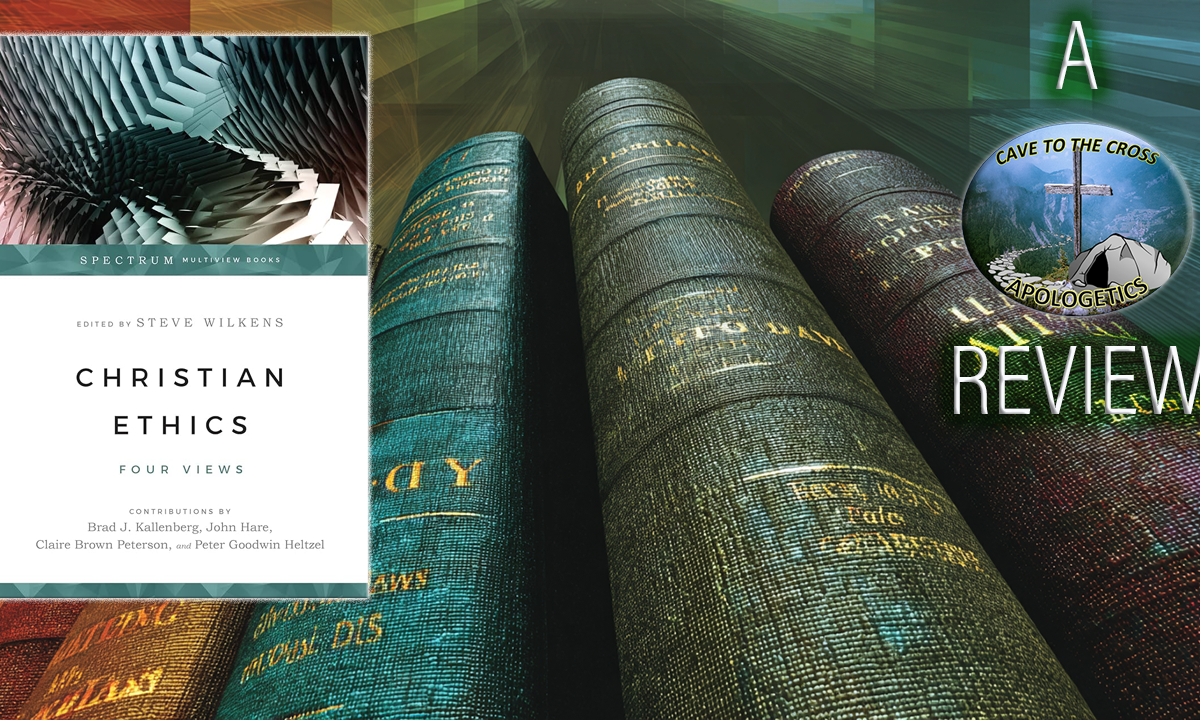
Spectrum Multiview Christian Ethics – Four Views edited by Steve Wilkens
Synopsis:
In the Spectrum Multiview volume Christian Ethics: Four Views, edited by Steve Wilkens, four leading scholars present and defend distinct approaches to moral decision-making within the Christian tradition, complete with respectful responses from the others to foster thoughtful dialogue. Brad J. Kallenberg champions virtue ethics, emphasizing the cultivation of Christlike character over rigid rules; Claire Brown Peterson advocates natural law, rooting objective morality in God’s created order accessible through reason; John Hare upholds divine command theory, grounding ethics in God’s sovereign will and commands; and Peter Goodwin Heltzel proposes prophetic ethics, calling for justice and shalom in light of biblical liberation themes. This multiview format shines in clarifying strengths and tensions among these systems, helping readers navigate the different ethical systems out there, and showing why these Spectrum Multiview or Counterpoint series books are important.
Video
Review
To see the full book discussion, chapter-by-chapter, you can find it here:
Cave To The Cross Full Book Discussion
Whether it’s IVP’s Spectrum Multiview Series or Zondervan’s Counterpoint Series, I’ve always enjoyed these written formats of a topic discussion. You get one book where you can learn about the different concepts of a subject without having to devote yourself to two, four, or six different books to get both a positive presentation to a viewpoint as well as a response against other viewpoints. This was my first read of IVP’s series and overall the format works. The editor is the one who presents a general overview of the sides as well as some of the history behind each side. This helps focus the viewpoint holders to honing their points well without have to provide the audience with a full overview of their position. The length for both presentation and response is ok. It does seem like the positive presentation is allowed to be longer while the responses are a bit more on the shorter side, but that could be a characteristic from this volume and not for the whole series. I would have liked to seen a longer response section. What’s missing is what the Counterpoint Series allows is that the viewpoint holder is allowed a very limited final statement section to address the counterpoints or to clarify their position further. I would have really liked to have seen that included in IVP’s version. It would have also been good to have the editor come back at the end to give a final send-off, not to pick sides but to give a message to take away from the discussion. This volume just ends with the final response to the final position and there isn’t really closure to the book.
All four of the presenters are competent in their own respective position and their pedigree makes them a good fit for the subject. However, none of the presenters really felt like a true bulldog for their position or against the other. This is usually one of the benefits of the written response debate format. It’s not about the rhetoric of speech but the logic of the argument. The speakers didn’t seem to show so much disagreement with the other positions. Now, this might just be the nature of the subject and disagreement does occur but the full force of distinction isn’t really made by any of the proponents. It also does appear as if some of the direction of what is being argued gets lost in the discussion. Is it a posit of the ethical framework only or does it involve one’s epistemology? Does one discuss possible responses or does one talk about how their system could incorporate the other(s)? Again, some of the direction gets lost and, again, not to just point to the Counterpoint series as superior, but it does seem their starting point clarifies the resolve and certain points that should be discussed to help focus and direct similarities and differences in the different approaches.
I learned the most about Brad Kallenberg’s virtue ethics. While reading his chapters and engaging in my own Bible study, I would see elements of virtue ethics within my own study of the book of Acts. What he tends to fail to bring up is initial starting points of knowing what acts are ethical and how those are known. For him, as his position seems to be at the end with “ethos”, I would think he’d want to say why the other positions can’t just swallow his position up as a more active or progressive sanctification approach.
Claire Peterson does a good job with the Natural Law ethic. I do find Natural Law proponents seem to write in a well-focused and logical manner and there are points where she finds some good disagreement with others. What shoots her in the foot in a subject which she is forced to bring up just from the nature of the discussion and that’s the discussion of whether Natural Law would be true even if God didn’t exist. This is something that none of the presenters really jump on her about and it should be a huge point to show a really big hole in the Natural Law viewpoint.
John Hare as the Divine Command proponent does a good job as well and tends to offer up the best initial presentation. He presents his positive case and then goes into some possible responses with his responses following. He tended to be a bit more spitfire and find disagreement more often but I was actually hoping for more. I also thought that he would have benefited from a short, final response (like in the Counterpoint format) to quickly respond to a few of the same points brought up by the other three.
Peter Heltzel for Prophetic Ethics probably had a harder road to travel. As this was being read in 2024/2025, his framework is not seen in the best light in conservative Christianity (and I will also admit to content farming him in videos as “Woke Theology” for engagement – it did work.). In 2017 when the book came out (and probably written in 2015/2016?), Social Justice Woke Theology Liberal Christianity was less well known. But all three opponents seemed really embracing of a lot of his presentation. To Heltzel’s credit too, he used a lot of Scripture in his presentation, more than any of the others who only had proof texts for their position but no real Scriptural presentation or backing. However, an embrace of Heltzel’s position just can’t be considered. With a focus on only social justice as an ethical goal, it leaves too much on the table for another worldview to swoop in and gobble up the rest – Marxism for example. But giving the benefit of the doubt, there’s more to life than marching for equality and the outcomes of Prophetic Ethics has already been seen and found wanting.
Overall, I think this is a good introduction to Christian Ethics. The authors don’t engage in too much scholar-speak to be confusing for the general audience and the big three are presented here by respectful and respected proponents. I would have liked to have seen less agreement or at least the agreement turned into, “and that’s why my position is better because it includes these things as well”. Check out the discussion on Cave To The Cross Apologetics!
Final Grade
B-
Get The Book (And Support The Show)
Cave To The Cross GoodReads Page
 To check out more reviews and see what Patrick’s reading go to his GoodReads page here.
Other book reviews can be found here.